While lion populations are on the decline almost all over Africa, Namibia is in the fortunate position of showing an increase, especially in the north-western communal areas – a result of the successful conservancy policy.
In the dry north-west of Namibia game numbers rise and fall with the rainfall cycles. In the nine years I’ve been hunting in the Torra Conservancy, situated between the Huab and Uniab rivers and bordered in the west by the Skeleton Coast Park, the game numbers have increased dramatically. So too have the numbers of large predators, that is spotted hyaena, leopard, cheetah and lion. Recent lion estimates put the population in this vast wilderness at about 160 and growing. Unfortunately, where large predators and subsistence stock farmers share common ground, a showdown is bound to occur.
Little did my client Bob – a Californian stock farmer – and I know that our showdown was about to occur with the lion holding all the advantages.
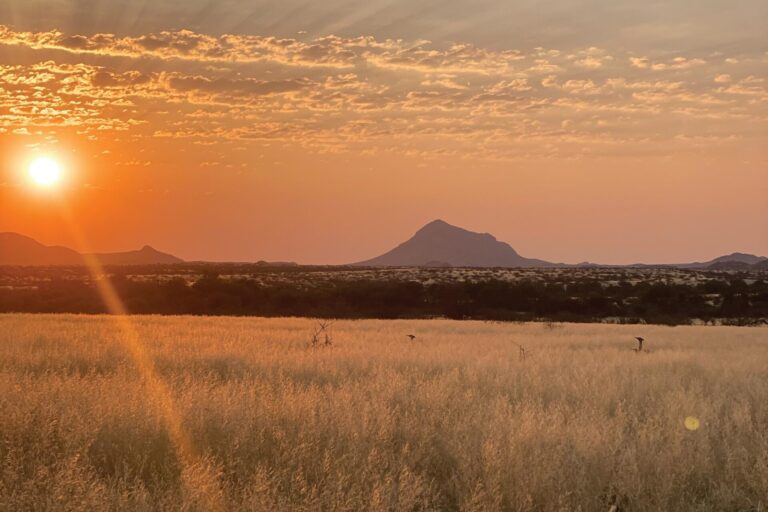
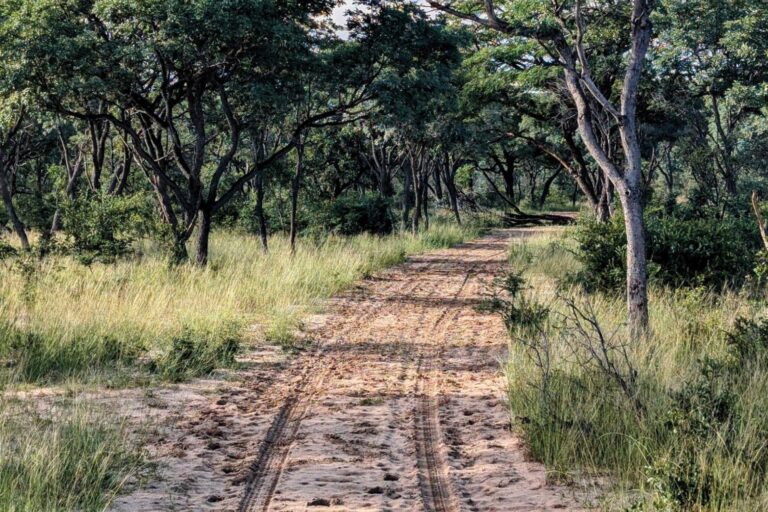
The Huab River Valley is a vast floodplain of shimmering heat with outcrops of black rock and a million miniature sand dunes – each covered in tamarisk bushes – providing perfect cover every 10 feet. The river has cut its way through the plain to become a meandering gorge of mud and sand. Huge ana trees, Faidherbia albida, grow in this gorge. Secondary gorges join the main sand river, all about 30 feet deep and choked with green mustard bush, Salvadora persica, referred to by locals as lion bush, because it is the favoured hideout of these cats.
A lion had been declared a problem animal in the conservancy, due to stock losses mounting up over a period of two years. I had had several encounters with lions and groups of lions at close quarters before, but each time the lions had held the advantage and I was not able to get the client into a position to take a good shot. These encounters usually ended with us backing away from the salvadora bush, and the lion threatening us from the safety of his hideout.
In an attempt to level the playing field, I decided to try and bait the lion so as to get a clear shot in the open. Bob and I discussed our plan on the long drive from Windhoek to our camp in the Springbok River. At first light we would shoot the first suitable gemsbok and head for the Huab, about an hour’s drive south of our camp.
The next morning, about two minutes from camp, a lone gemsbok bull stood staring at the approaching vehicle from 300 yards. “This is a bait collection exercise,” I said. “Just shoot from the car.” Bob delivered a perfect shot. As we drove up to the animal, I could hardly believe my eyes. Bob's 40 inch gemsbok was already in the bag – not the way we wanted it – but we’d take it! After caping the animal, we headed south.
We negotiated our way through the soft sand in the Huab for some kilometres, looking for a sign. At the first open muddy waterhole there were tracks of two lions. The tracks looked only hours old. Change of plan. We’d try tracking them again.
The lion and lioness were hunting, walking about 50 yards apart into the westerly morning breeze. They would meet up every 200–300 yards and then split up again. The lion walked on the edge of the gorge with the lioness 50 yards abreast. I guess their plan was if either spooked a kudu or gemsbok that had come to drink – the other would be in an ambush position. Their tracks led us through reed beds and dunes for about an hour – I just hoped their ambush plans didn’t include us.
Suddenly the wind did a 180-degree turn. The cool sea breeze turned into a scorching easterly wind. The lions changed their tactics in accordance with the wind – they crossed the Huab at this point, a trickle through white sand banks, and climbed the gorge, hunting on into the wind.
Their change in tactics had happened only minutes before we came right behind them. We moved silently, slowly, every nerve on edge. I indicated to Bob that I needed him at my side. It was now 9:30 and really hot. These lions must look for shade soon – their strides had shortened and they now walked together. Suddenly they branched off into a narrow gorge with sides about 30 feet high. We were met by a wall of salvadora bush. The lion had gone into a tunnel in the bush, but we were not mad enough to follow.
Silently we climbed a mud ridge to get above the donga (gorge), so that we could look down into it. The first look over the edge was a cautious one. Nothing. Moving on, we peeped over the edge every so often. Nothing and nothing again. Then, the fourth time I looked over the edge, I came eye to eye with a huge and magnificent male lion, 30 feet away. For a split second I stared into his awe-inspiring flaming yellow eyes. Then he let out a terrifying grunt and took off. The lioness jumped over the top of the salvadora bush, but the male was too heavy – he couldn’t get moving fast enough. Bob had followed my instructions and was at my side. “Shoot,” I shouted, “the one on the left.” He fired the 416 and the lion sagged – I fired a back-up shot and the lion fell through the canopy of the salvadora bush and disappeared.
The heat and silence suddenly seemed oppressive. We stood, shocked, for some minutes. The hours of tension left us shaking – or was it fear? There wasn’t a lion in sight. I was pretty sure the lion had been hit hard, but couldn’t be sure that he was dead. John, my tracker, had carried my shotgun – I loaded with two solids and told Bob to stand at the ready in case there was any movement. I had to walk to the other side of the gorge to find a place to slip down into the mustard bushes. I slid down, which was madness, but I had little choice. I climbed through the salvadora branches without being able to get my feet on the ground. All I could see through a gap in the branches was a staring lifeless yellow eye. I went closer. He was indeed dead. The few seconds we’d had to see the lion before he tumbled from view, he’d looked somewhat strange – now only inches from him, I realised why: he was all mane. The huge mane made him look out of proportion. What a sight and what a trophy. Through the tangled branches I could see the bones, skulls and hair of their kills – Hartmann’s zebra, horse, cattle, gemsbok and springbok remains – this was their lair.
Now we had to get the lion out for photos. If we got Bob into the donga, we’d never get him out. Abiliu, my tracker of 25 years and now my PH, had waited with the car at the river crossing. I called him on the radio and asked him to bring up the car. This was to be a mission in itself, taking about an hour. After two hours of winching, pulling with the car, broken straps and snapped nylon ropes, we finally succeeded in getting the lion out of there. Once, when the nylon rope snapped, Abiliu was under the lion, but was fortunately not injured.
When we returned to Bergsig, farmers and the tribal committee were there to thank us and curse the lion in the most endearing terms. The schoolchildren were given a holiday. The crowd thronged round the carcass, trying to see and touch it. The skinner’s job was almost impossible until the two local policemen were called in to restore order.
Bob and I, exhausted, had an early night.
But the fires in the village burnt into the early hours as every last morsel of the lion was devoured as a delicacy – the meat, the fat, the tail, the intestines, organs, the lot.
As I write, I’m preparing to make the trip to the north for another showdown. Already the butterflies have started.