For trophy hunters from all over the world who consider Namibia as their preferred African hunting destination, I have this message: The Government of Namibia will ensure that our country will not lose its esteem in the world of trophy hunting and we will strive to maintain our competitive advantage at all times.
Cabinet recently approved a moratorium on the import of large predators and alien species of wild animals to the benefit of the trophy-hunting sector in Namibia by preventing captive lion breeding and the possible invasion of alien plant and animal species that may endanger our genetic integrity. The moratorium will also prevent the invasion of natural systems in Namibia and the subsequent environmental hazard that the invasion of alien species will cause. It is vital to protect the authenticity of the Namibian trophy-hunting experience where substantial numbers of indigenous species roam freely in their pristine, natural habitat where no genetic pollution or hybridisation will take place.
Ten years ago, in the first edition of Huntinamibia, the Ministry of Environment and Tourism promised to provide the framework within which the trophy-hunting sector could operate effectively. My Ministry also accepted the responsibility to ensure that there would be recognition for the important role that trophy hunting plays in the conservation of wildlife. In both cases, we have succeeded. Through the approved Policy on Tourism and Wildlife Concessions on State Land and the pending Parks and Wildlife Management Bill, the Government of Namibia ensures that our natural resources are used to benefit future generations. It is in line with this policy that the Namibian Cabinet recently approved the trophy-hunting concessions on state land and the MET is in the process of preparing for the auction and allocation process.
It is our mutual responsibility to ensure that there is recognition for the important role sport hunting plays in the conservation of wildlife. Namibia’s conservancy movement is considered as the global benchmark in sustainable, community-based natural resource management. It is a clear demonstration of the strong linkages between effective conservation and well-managed trophy hunting and other forms of wildlife utilisation. Rural communities once threatened by wildlife are now part of a unique, natural synergy that is to their benefit. There can be no argument that trophy hunting has become an accepted management practice for the removal of post-productive animals.
Trophy-hunting concessions represent a valuable economic asset and hunting experiences with considerable international marketing potential. The granting of such concessions can play a beneficial role in Namibia’s rural areas, as a means of creating employment, facilitating the empowerment of formerly disadvantaged Namibians, contributing to the management of declared problem animals, addressing over-population of certain species and generating revenue from land or resources that are otherwise unproductive.
From 1998 to 2007 the income generated through trophy-hunting concessions in communal areas increased from half a million Namibia dollars to N$6.4 million annually. My Ministry conducts annual game counts with communal conservancies in collaboration with ICEMA to determine game populations and to establish quotas for trophy hunting. It is not possible to over-utilise game populations, because quota settings are scientifically based and very conservative. Management plans for rare and endangered species have been developed in collaboration with the Namibia Nature Foundation to ensure sustainable utilisation of high-value species such as roan, sable, buffalo, and elephant.
Over the past ten years, the MET has monitored trophy-hunting practices closely. We established a data-base system at the permit office where all the returns of the trophy-hunting permits are entered for effective monitoring purposes. Application for a utilisation permit can be compared to the actual utilisation and again compared to the export permit, enabling us to know exactly what the status of the process is.
Cabinet approved the introduction of levies on wildlife utilisation permits, including trophy hunting, for re-investment and monitoring. The revenue accrued from their levies is deposited in the Game Product Trust Fund through which monitoring of the utilisation of these species can be subsidised.
The Namibian Government maintains the policy that the MET will register only trophy-hunting operators resident in the country. Namibia is the only country in Africa where this is the case and we have good reasons for our decision. The MET will take a ‘zero tolerance’ approach to this issue to protect the integrity of the Namibian trophy-hunting industry. During the past ten years the MET has monitored hunting practices very closely in order to combat techniques of hunting that can be associated with ‘canned hunting’. The principles of ethical hunting and fair chase are applied very diligently in the trophy-hunting sector in Namibia.
No other sector involved with wildlife utilisation has contributed more than the trophy hunting industry to attain the goals expressed in Vision 2030. It is therefore important to promote, nurture and protect the trophy-hunting sector in Namibia for future generations.
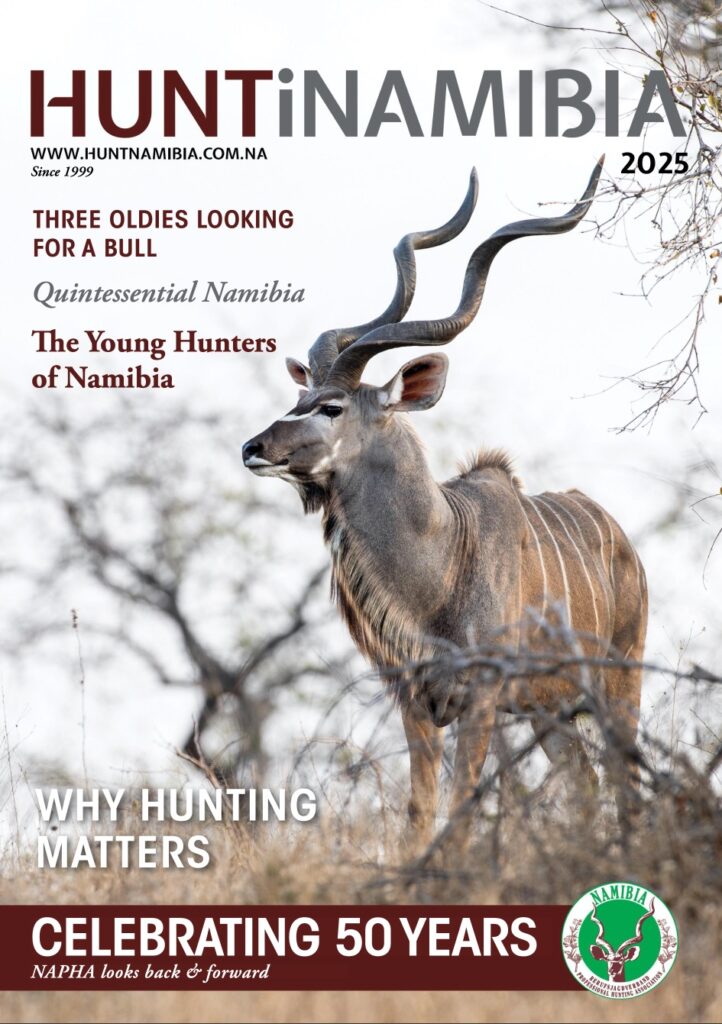
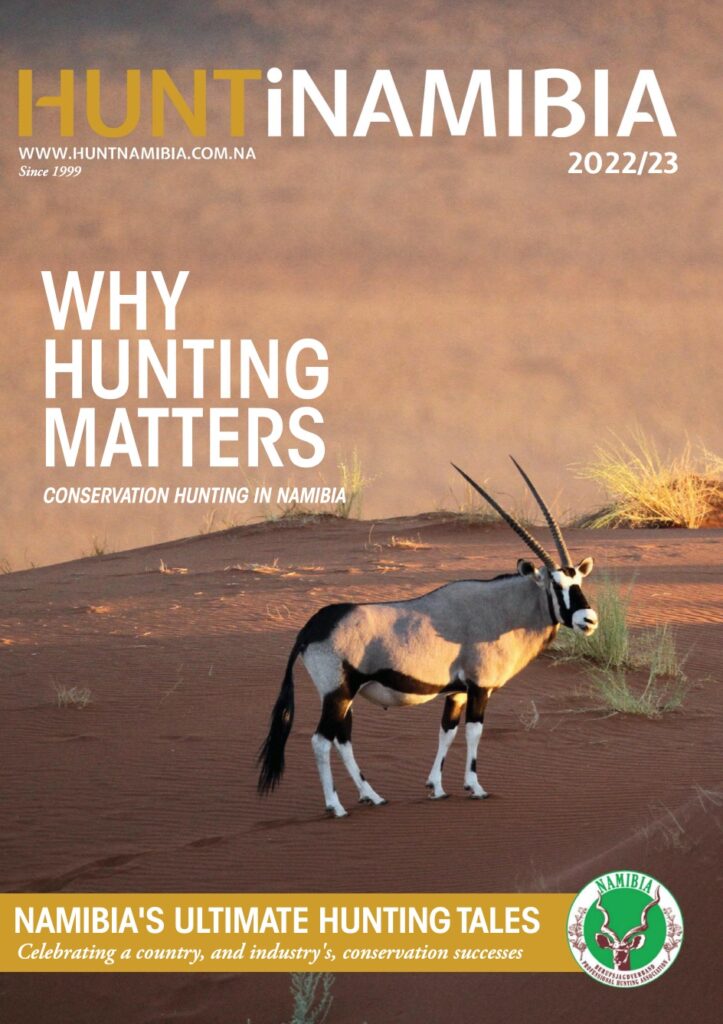
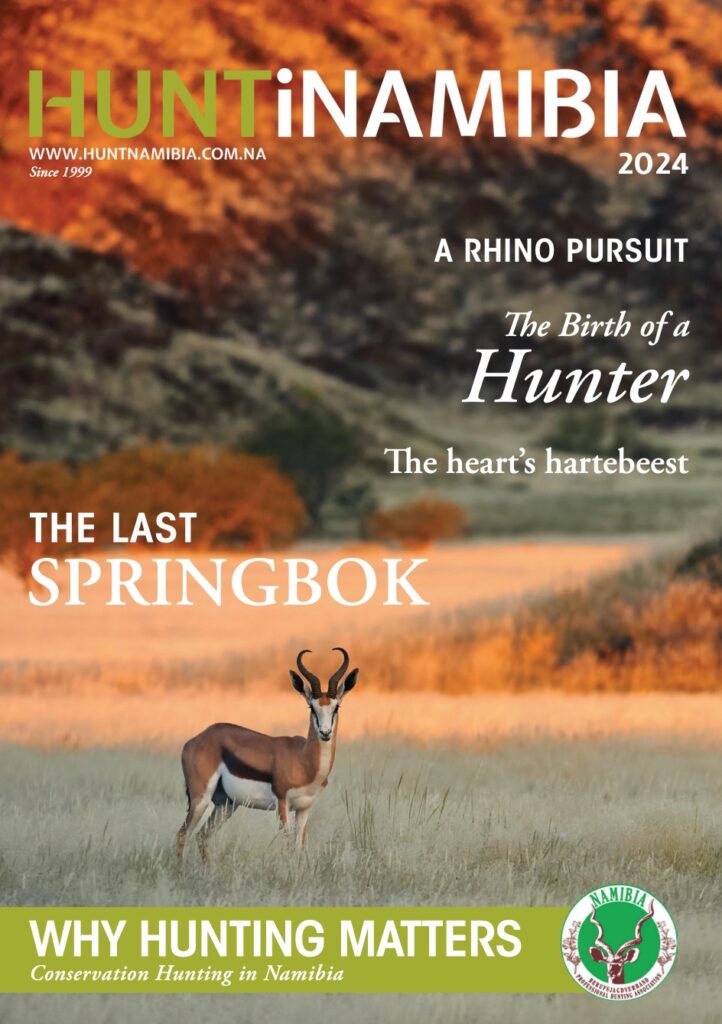
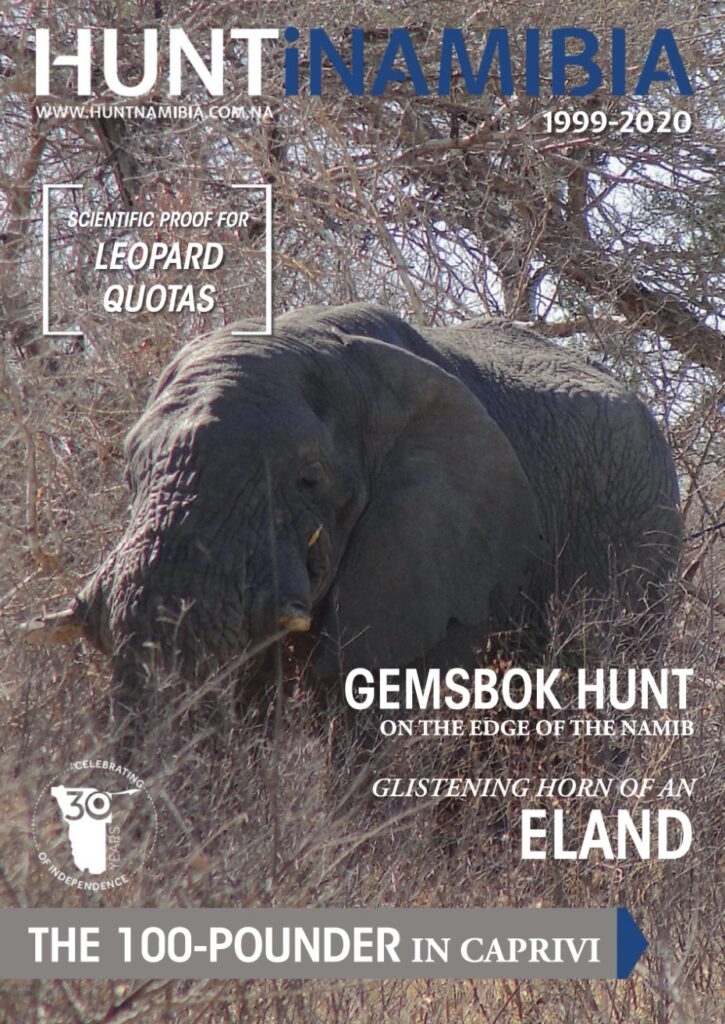
I would also like to express my congratulations and appreciation to Venture Publications for the 10 years the company has promoted hunting through Huntinamibia. The magazine demonstrates to hunters all over the world that Namibia upholds ethical and high standards and has strong structures to support the sector and maintain its famously superior product at all times.
Cabinet approved the introduction of levies on wildlife utilisation permits, including trophy hunting, for re-investment and monitoring. The revenue accrued from their levies is deposited in the Game Product Trust Fund through which monitoring of the utilisation of these species can be subsidised.
The Namibian Government maintains the policy that the MET will register only trophy-hunting operators resident in the country. Namibia is the only country in Africa where this is the case and we have good reasons for our decision. The MET will take a ‘zero tolerance’ approach to this issue to protect the integrity of the Namibian trophy-hunting industry. During the past ten years the MET has monitored hunting practices very closely in order to combat techniques of hunting that can be associated with ‘canned hunting’. The principles of ethical hunting and fair chase are applied very diligently in the trophy-hunting sector in Namibia.
No other sector involved with wildlife utilisation has contributed more than the trophy hunting industry to attain the goals expressed in Vision 2030. It is therefore important to promote, nurture and protect the trophy-hunting sector in Namibia for future generations.
I would also like to express my congratulations and appreciation to Venture Publications for the 10 years the company has promoted hunting through Huntinamibia. The magazine demonstrates to hunters all over the world that Namibia upholds ethical and high standards and has strong structures to support the sector and maintain its famously superior product at all times. Honourable Netumbo Nandi-Ndaitwah Minister of Environment and Tourism